Always Forever: A Designer’s Review for Embroidery Projects
As a designer who has spent countless hours digitizing patterns and testing them on various machines, I have learned that not every pretty graphic translates well into thread. When I first encountered Always Forever, my initial reaction was one of cautious optimism. It sits squarely in the Crafts and Graphics category, offering an SVG file and a transparent image file. These formats are versatile, compatible with design software like Cricut Design Space and Silhouette, but for those of us focused on needle and thread, the real question is always: how does it stitch out?
I decided to put this design through its paces, not just as a digital asset, but as a potential centerpiece for a real-world embroidery project. My goal was to determine if Always Forever could hold its own in a commercial setting, specifically for a small batch of custom tote bags and sweatshirts I was preparing for a local craft fair.
First Impressions and Visual Personality
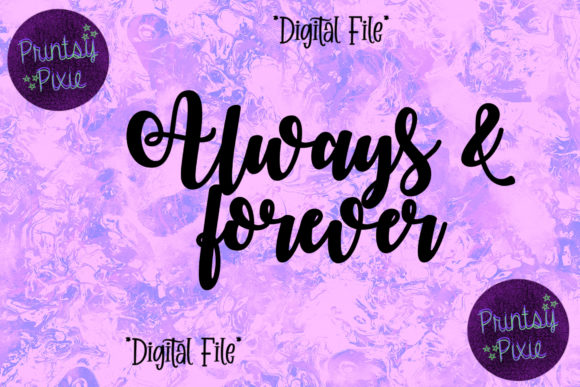
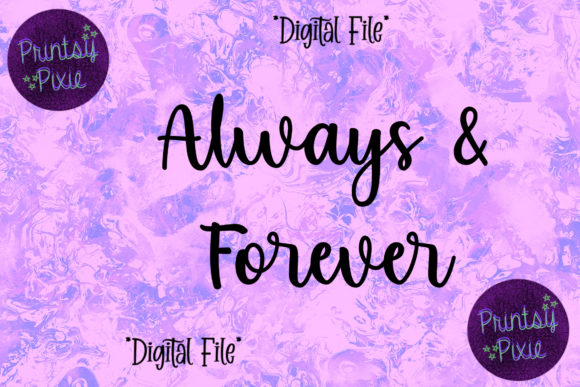
The mood of Always Forever is romantic yet modern. It avoids the overly ornate clutter that often plagues wedding-themed designs, opting instead for a cleaner layout. This simplicity is a double-edged sword in embroidery. On one hand, clean lines are easier to read from a distance. On the other, they leave no room for error. If your tension is off or your stabilizer is insufficient, the flaws will be immediately visible.
The visual personality suggests versatility. It feels at home on a nursery wall just as much as it does on a bridal shower gift. For an Etsy seller or a small shop product creator, this adaptability is crucial. You want a design asset that can serve multiple niches without requiring significant modification. The shape and theme imply longevity and commitment, making it a strong candidate for personalized gifts where emotional resonance drives the sale.
Real-World Application: The Tote Bag Test
To test the practicality of Always Forever, I chose a heavy canvas tote bag as my primary substrate. Canvas is forgiving, but it has a distinct fabric texture that can interfere with fine details. I loaded the SVG into my embroidery software to convert it into a machine embroidery design. Since the product description notes compatibility with various design softwares, the import process was smooth, but the digitization work remained entirely on my shoulders.
I opted for a combination of satin stitch for the lettering and a light fill stitch for any decorative elements. The result was striking. The contrast between the thick, glossy satin columns and the matte canvas created a tactile depth that flat printing simply cannot achieve. Customers at the fair were drawn to the texture. They ran their fingers over the stitching, which is often the deciding factor in converting a browser into a buyer for a handmade product.
However, I also tested the design on a fleece sweatshirt. Here, the Always Forever design required careful handling. Fleece is plush and unstable. Without a proper cut-away stabilizer, the design risked sinking into the fabric. I used a topping stabilizer to keep the stitches floating on the surface. The final sweatshirt embroidery looked professional, but it taught me that this design demands respect for material properties. It is not a "load and go" file; it requires a designer’s eye to adjust density and pull compensation.
Navigating Technical Challenges
While Always Forever is visually appealing, there are specific scenarios where it should be used with caution. If you are working with a small hoop size, such as a 4x4 inch hoop, you must ensure the design fits without compromising legibility. Shrinking the design too much can cause the stitch density to become problematic, leading to thread breaks or fabric puckering.
Another critical consideration is the type of stitch used. If the original graphic relies on thin lines, converting them directly to running stitch might look sparse on textured fabrics. In my testing, I found that slightly increasing the stitch width helped maintain visibility on darker fabrics. Speaking of dark fabrics, thread colors play a pivotal role. A low-contrast color choice can render the design invisible from a few feet away. I recommend testing your Always Forever embroidery in black and white mockups first to check for value contrast before committing to expensive threads.
For those considering commercial embroidery on curved surfaces like caps, be wary. The rigid structure of a cap front panel can distort designs that are too wide or have uneven weight distribution. Always Forever works best on flat or slightly curved surfaces where the hoop can hold the fabric taut and uniform.
Enhancing Brand Value and Customer Trust
From a business perspective, the quality of your finished product directly impacts customer trust. A well-executed Always Forever design signals professionalism. It shows that you understand the limitations and strengths of your equipment. For craft business owners, this attention to detail differentiates you from competitors who might use low-quality, auto-digitized files that unravel after a single wash.
The design also lends itself well to printable mockup creation. Because the SVG and transparent image files are included, you can easily create digital previews for your online store. This allows you to market the item as a personalized gift or custom apparel option before you even stitch a single thread. This pre-visualization helps manage customer expectations and reduces the likelihood of returns due to misunderstood sizing or placement.
Practical Notes for the Embroidery Designer
Before you integrate Always Forever into your workflow, consider these practical steps:
- Test on Scrap Fabric: Always run a test stitch on the same type of fabric you plan to use for the final product. This reveals issues with tension and registration.
- Check Stitch Density: If you are digitizing from the SVG, ensure the density is appropriate for the fabric weight. Heavy density on lightweight fabric will cause puckering.
- Verify Licensing: While the files are provided for design software use, always confirm the licensing terms for selling finished items. Ensure you have the right to use the design for commercial embroidery projects.
- Stabilizer Selection: Match your stabilizer to your fabric. Use cut-away for stretchy knits and tear-away for stable wovens.
- Inspect Small Details: Zoom in on your digitized version. Are there tiny jumps or unnecessary trims? Clean up the pathing to reduce production time.
In conclusion, Always Forever is a robust addition to a designer’s library, provided it is treated with the technical care it deserves. It bridges the gap between digital Graphics and tactile Crafts, offering a pathway to create high-value, emotionally resonant products. Whether you are creating holiday embroidery for gifts, baby embroidery for nurseries, or embroidered patch designs for branding, this pattern offers a solid foundation. Just remember that the file is only the starting point; your skill in execution is what truly brings Always Forever to life.